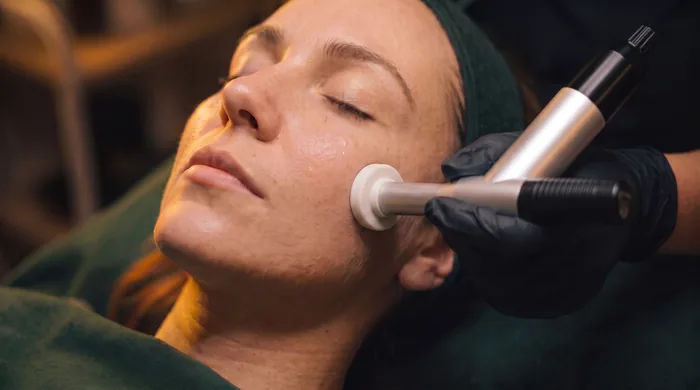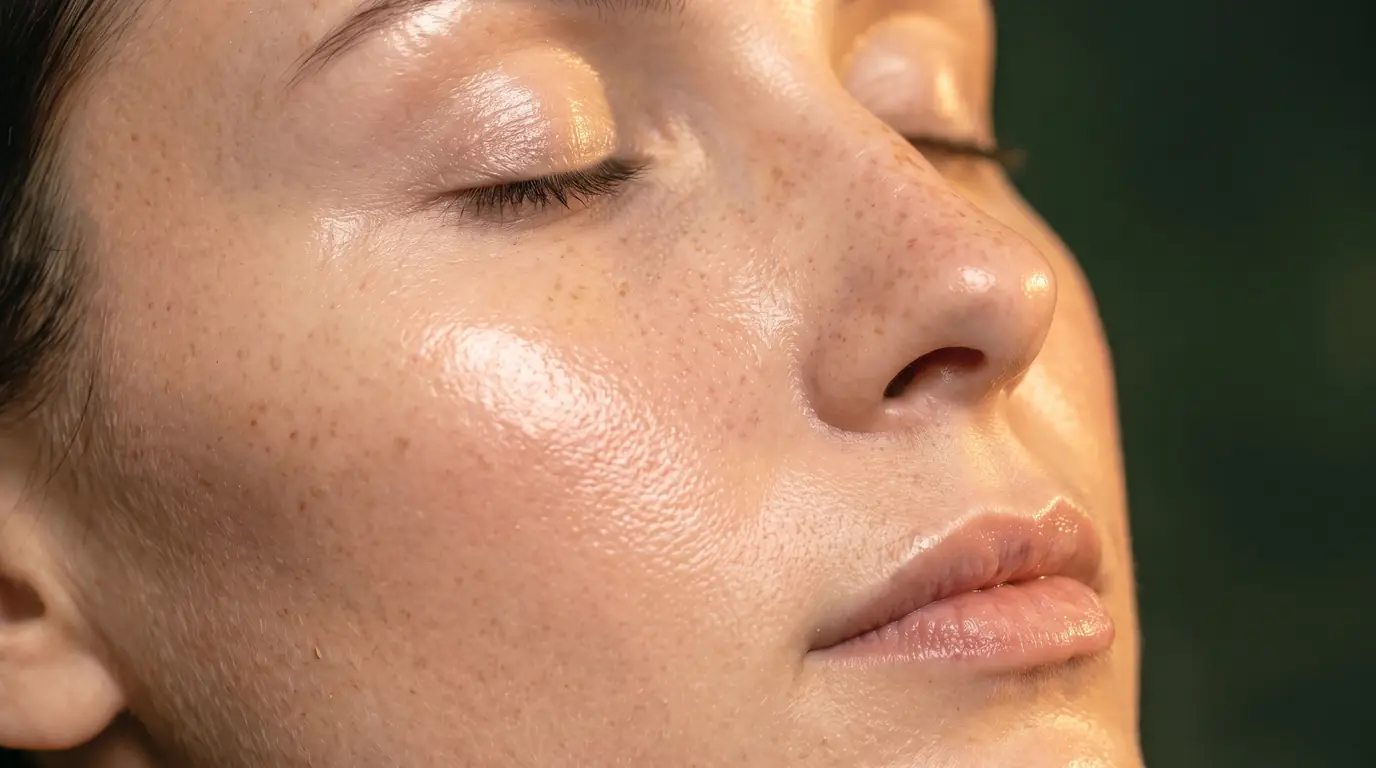
Glass skin is not a skin type. It is a finish — the way a smooth, well-hydrated surface catches light. That is good news, because a finish can be built.
The phrase comes from Korean skincare, and it has been everywhere for years, usually attached to a photograph of someone who does not appear to have pores. So before you book anything, it helps to know what you are actually looking at, how much of it a facial can deliver, and what it takes to hold the look in a valley as dry as this one.
Everything here is shared for education only — a cosmetic, appearance-focused perspective, not medical advice, diagnosis, or treatment of any condition.
What is glass skin, really?
Answer first. Glass skin is skin that looks smooth, even and clear enough to reflect light in one clean sheet rather than scattering it. That is the whole effect. It is about light, not about perfection.
A smooth, hydrated surface reflects light the way a still pond does. A rough or dehydrated surface scatters it, the way the same pond does in wind. Two faces with identical features can read completely differently for that reason alone. One looks lit from within. The other looks flat.
Three things decide which one you see:
- Surface texture. Built-up dead cells and congestion roughen the surface, and rough surfaces scatter light.
- Water content. Well-hydrated skin is plumper and smoother at the surface. Dehydrated skin shows fine lines and a papery flatness.
- Evenness of tone. Dullness and patchiness break up the reflection, even when the texture is smooth.
Underneath all three sits the skin barrier, which decides whether any of it lasts.
What most people mean by glass skin is simpler than the photographs. They want skin that looks clear and hydrated. Natural looking, never overdone. That is a realistic goal, and it is the one I work toward.
The skin barrier is what makes it hold
The skin barrier is the outermost layer of your skin: flattened surface cells held together by lipids, often described as bricks and mortar. Its job is to keep water in. When it is intact, the hydration you put into your skin stays there, and the surface stays smooth and even. When it is stripped, water escapes, and the skin turns tight, flat and quick to look dull no matter how much you apply.
This is the part of glass skin most people skip. Hydration is what you add. The barrier is what holds it. Adding a great deal of hydration to a stripped barrier is filling a bucket with a hole in it.
It is also why the Korean approach is so gentle. It favours layered hydration and barrier support over harsh exfoliation, because a well-supported barrier is what turns a dewy finish from an afternoon's effect into a daily one.
What the photographs are not telling you
Much of the glass skin you see online is lit, angled and filtered. Some of it is makeup — a dewy base and highlighter do a convincing impression of the real thing. None of that is a reason to give up on the look. It is a reason to aim at your own skin, on an ordinary morning, in daylight.
Pores are the other honest point. Pore size is largely genetic and tied to how much oil your skin makes. No facial changes that permanently, and anyone who promises otherwise is selling the photograph. What a good facial can do is clear what sits inside the pores and smooth the skin around them, so they read smaller and the surface looks more even. The trend itself has moved this way: the current version of glass skin is less about poreless and more about even, supple and well hydrated.
What a Korean facial can actually do
The facial I perform for this is the Korean Aqua Peel, the Korean facial on my menu in Murray. It works on all three of the things that decide the finish, in one sixty-minute session, and it is built to support the skin barrier rather than strip it, so the hydration holds after you leave.
- Deep cleanseThe surface is cleared of oil, product and daily buildup, so what follows reaches the skin rather than the film on top of it.
- Gentle resurfacingHydro-dermabrasion lifts dead surface cells and clears congested pores with suction and water. No acids and no peeling, so the barrier is left intact rather than stripped.
- Serum infusionAntioxidant-rich, hydration-first serums go in while the surface is freshly cleared, which is when it takes them up best. They are chosen to support the barrier, so the water they bring stays in the skin.
- Red light finishThe session closes under red light, included in the hour.
Most clients see the result the same day: brighter, smoother and visibly more hydrated. There is no recovery time. A brief flush is common and usually settles within thirty minutes. I ask you to skip makeup for a few hours so the serums can finish absorbing, and to wear sunscreen afterwards, as always.

See more Korean Aqua Peel results
If you are weighing it against the better-known branded version, I have written a separate comparison of the Korean Aqua Peel and HydraFacial. The short version is that they belong to the same family. The protocol and the serums are what differ.
How long does the finish last?
This is the part most glass skin content leaves out. The finish from one session is real, and it is temporary. Skin renews its surface continuously, and the hydration you leave with softens over the following weeks as that cycle runs.
So glass skin is held by rhythm rather than by any single appointment. For ongoing clarity I suggest a Korean Aqua Peel every four weeks. That spacing matches how quickly the finish fades, and it keeps the surface from building back up to where it started.
If your concern is texture that sits deeper than the surface — a roughness that hydration alone does not smooth — microneedling with skin boosters is the slower, cumulative option. It runs as a series rather than a single visit, and the microneedling guide explains how that works. The Aqua Peel is safe between those sessions as a clarity facial.
The Korean Aqua Peel is my hydration-first Korean facial, finished under red light.
Reserve Your SessionWhy glass skin is harder to hold in Salt Lake
Korean skincare was shaped by a climate with humid summers and long, cold, dry winters spent indoors with the heating on. That is a large part of why it leans so heavily on hydration and barrier support. The Salt Lake Valley asks for the same care, with one difference: the dry season here includes summer. July afternoons in Salt Lake City average under 40 percent humidity, against more than 70 percent in Seoul. Add winter furnace air and hard water, and all three pull against a dewy finish every single day between appointments.
I have written about this in more depth in Dry Utah Air and Your Skin, so I will not repeat all of it here. What matters for glass skin is the conclusion: in this valley, the finish is decided at home as much as in my studio.
What holds the finish between sessions
- Gentle cleansing. Hard water makes cleanser lather less and can leave a film behind, so it is easy to reach for more product. Use less, not more. In a 2018 study, washing in hard water left more cleanser residue on the skin and let more water escape through it. A mild cleanser, lukewarm water, a thorough rinse, and no rough washcloth.
- Layered hydration. A hydrating layer on damp skin, then a moisturiser to seal it in and support the barrier. Two thin layers do more than one heavy one.
- Sunscreen every morning. The valley sits at roughly 4,300 feet. Dullness and uneven tone build quietly at elevation, and they break up the reflection you are working toward.
- Fewer actives, not more. Stacking exfoliants in pursuit of glow strips the barrier, which is an easy way to end up with tight, flat skin instead. When in doubt, subtract.
Glass skin is a surface. Contour is something else.
One distinction worth keeping clear. Glass skin describes the surface: texture, hydration, tone. It says nothing about how the face sits — the lift of the cheek, the definition along the jaw. Those come from beneath the skin, from the fascia and held tension that shape the face's architecture.
A Korean Aqua Peel works on the surface. The Restorative Buccal Facial works underneath it. They answer different questions, and they pair well. If you want both, book them in the same visit or the Aqua Peel as an add-on.
Who it suits, and who should wait
A hydration-first facial suits dull, dehydrated or congested skin, uneven texture, and skin that has never tolerated chemical peels. It is gentle enough for sensitive skin.
It is not the right booking if you have active cystic acne, sunburned or wind-burned skin, open sores, severe rosacea or very fragile skin, or if you have had facial surgery in the last six to twelve weeks. If you are unsure, send me a message before you book and I will help you decide.
And one boundary worth stating plainly. If something about your skin is genuinely worrying you rather than simply not looking the way you would like, that belongs with a physician or dermatologist first. I do not diagnose skin conditions, and a facial is not a substitute for that conversation.
Booking in Murray and Salt Lake City
Altru Radiance is in Murray, Utah, near Fashion Place Mall, and I see clients from across the Salt Lake Valley — Salt Lake City, Millcreek, Holladay, Sandy, Cottonwood Heights and Draper. The Korean Aqua Peel is sixty minutes and $200, with the red light finish included. Every session is performed by me, a licensed master esthetician, and starts with reading the skin in front of me rather than running a fixed protocol.
If you have an event coming up, the Aqua Peel is one of the few facials designed to be booked close to the date — 24 to 72 hours ahead. The event countdown shows where it fits with everything else.
Common questions about glass skin
What is a glass skin facial?
A glass skin facial is a hydration-first facial built to leave the skin looking smooth, even and clear, so it reflects light cleanly instead of scattering it. It is not a specific device or brand. The Korean Aqua Peel is the version I perform: a deep cleanse, gentle resurfacing with no acids, serum infusion, and a red light finish.
Can one facial give you glass skin?
One facial gives you the finish for a while. Most people see it the same day, and it softens over the following weeks as the skin cycles. Holding it is a rhythm, not a single appointment. I suggest a Korean Aqua Peel every four weeks, with simple, consistent hydration at home in between.
Is glass skin harder to get in Utah?
It is harder to hold. Summers in the Salt Lake Valley are dry, winter heating makes indoor air drier still, and valley water is hard. All three pull against a dewy finish. The answer is not a longer routine. It is a supported skin barrier: steady hydration, gentle cleansing, and sunscreen every day at this elevation.
Does a Korean Aqua Peel support the skin barrier?
Yes, that is how it is designed. There are no acids and no peeling, so the resurfacing leaves the barrier intact rather than stripping it, and the hydration-first serums are chosen to support it. A supported barrier is what lets the hydration hold after the session, which is the difference between a finish that lasts an afternoon and one that lasts weeks.
Does a glass skin facial make pores disappear?
No. Pore size is largely set by genetics and oil production, and no facial changes that permanently. What a hydration-first facial can do is clear what sits in the pores and smooth the surface around them, so they read smaller and the skin looks more even. That is a visible change, and it is honest to call it that.
How long before an event should I book a glass skin facial?
Book a Korean Aqua Peel 24 to 72 hours before the date. There is no recovery time, any brief flush settles well before you are photographed, and the serums have time to integrate fully. If you have never had one, have your first session well ahead of the event rather than that week.
One letter a month, from my studio
How the face is built, what I'm seeing in the studio this season, and what you can do at home between visits. No offers, no filler. Reply any time; I read every one.