Utah air pulls water out of skin every day of the year, and most people only notice in January. Here is what this climate actually does to a face, what genuinely helps, and what quietly makes it worse.
Nearly every new client I see in Murray says a version of the same sentence. My skin was fine before I moved here. Or: my routine stopped working and I cannot work out why. Nine times out of ten it is not the routine. It is the valley.
Everything here is shared for education only — a cosmetic, appearance-focused perspective, not medical advice, diagnosis, or treatment of any condition.
Why Utah air is hard on skin
The Salt Lake Valley sits at roughly 4,300 feet in one of the driest states in the country. That combination matters more than people expect. Air holding very little moisture will take moisture from whatever is nearby, and your skin is the nearest available source for every hour you are outside.
The seasons only change the mechanism. Summer brings heat, strong sun at elevation, and long dry afternoons. Winter brings furnaces and forced-air heating, which produce indoor air drier than the outdoor air it replaced. There is no soft season here, only different versions of the same pull.
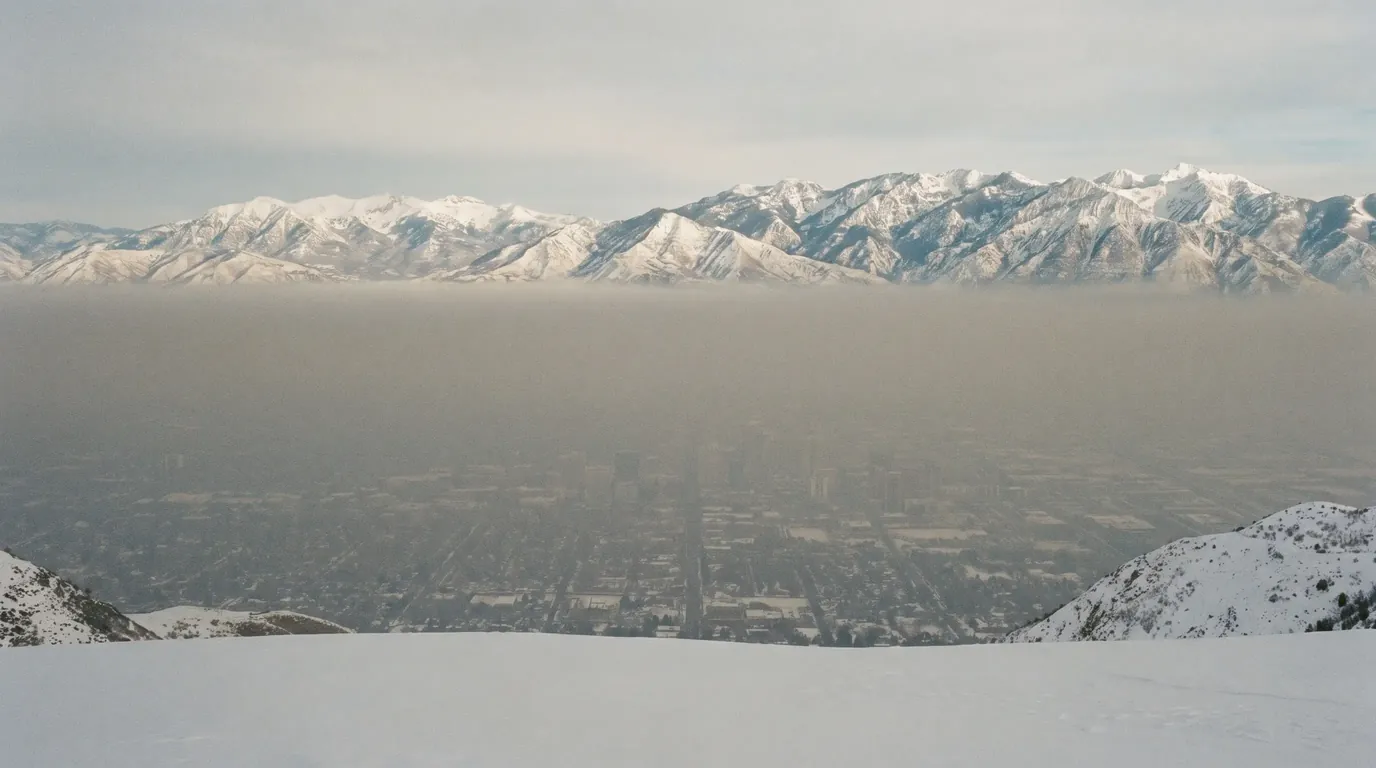
Inversion weeks add their own layer. Clients tell me their skin looks duller and feels tighter through a long inversion, and that makeup sits worse. I would not overclaim what causes that. What I can say is that it shows up in the studio every January, in enough faces that it stopped reading as coincidence years ago.
Dry skin and dehydrated skin are not the same thing
This is the most useful distinction I can hand you, and almost nobody arrives knowing it.
Dry describes a skin type. It means your skin does not produce much oil, and it is largely how you are built. Dehydrated describes a condition. It means your skin is short on water, and any skin type can be dehydrated, including skin that is visibly oily.
Utah manufactures dehydration in everyone. That is why so many people here end up with the confusing combination of an oily T-zone and flaking cheeks in the same week. They read the oil, decide their skin is oily, and reach for something stripping. The stripping removes water along with the oil, the skin answers with more oil, and the cycle tightens.
The signals worth knowing:
- Skin feels tight for a few minutes after cleansing, then settles
- Makeup clings to small flakes it did not cling to last year
- Fine lines look shallower in the morning and deeper by evening
- The surface reads dull rather than rough
- Products that used to sink in now seem to sit on top
If that list sounds like your face, you are far more likely dehydrated than dry, and the answer is water plus something to hold it there, not heavier oil.
The hard water nobody warns you about
Water across the Salt Lake Valley runs hard. The mineral content is high enough that you can see it on a shower door and taste it in a glass, and it behaves differently on skin than the soft water many transplants grew up with.
Two things follow. Cleansers lather less in hard water, because the minerals bind to the cleanser before it can foam, so it is easy to reach for more product. And the same reaction leaves a faint film behind. In a 2018 study, washing in hard water left more cleanser residue on the skin and let more water escape through it. That residue is one reason skin can feel tight and look flat rather than clean.
The practical version: use less cleanser rather than more, keep the water lukewarm, and wash your face at the sink instead of standing under a hot shower with it. A shower filter is worth trying if the tightness is severe, though I would change the water temperature first, because that is free.
What actually helps here
None of this is exotic. It is the short list I give clients in Murray, in the order that matters.
Layer water, then seal it in
Apply your hydrating layer to skin that is still slightly damp, not bone dry. A humectant such as hyaluronic acid or glycerin pulls water toward the surface, and a moisturiser on top gives it somewhere to stay. Humectant alone in dry air can work against you, because nothing is holding what it draws up. Always seal it.
Run a humidifier where you sleep
Of everything on this list, this is the change clients report back on most. Eight hours a night in air you have made less thirsty does more for a face than most serums, and it costs less than one of them.
Wear SPF every single day
Ultraviolet exposure climbs with elevation, and valley snow reflects a good deal of it back at you. Winter here is not a season off. Sun protection is the most reliable appearance-preserving habit available, and it is the one people skip from November through March.
Ease off the actives in winter, build back in spring
Retinoids and acids are not the enemy. Running the same strength through January that worked in June often is. Pull the frequency back when the air turns, then build it up again as spring arrives.
What quietly makes it worse
The mistakes I see most are all well intentioned.
- Over-exfoliating. Scrubs plus daily acids plus a retinoid is too much for skin already losing water to the air.
- Adding several new products at once. When skin gets unhappy the instinct is to buy more, and it makes the cause impossible to identify.
- Long hot showers. They feel wonderful in a Utah winter, and they strip the surface every time.
- Chasing the squeaky-clean feeling. That squeak is not cleanliness. It is a stripped surface announcing itself.
- Alcohol-heavy toners. Fine for some skin in humid climates. Rarely a good idea at 4,300 feet.
One boundary worth stating plainly. If your skin is cracking, bleeding, or holding red inflamed patches that will not settle, that is a conversation for a physician or dermatologist rather than an esthetician. I do not diagnose skin conditions, and I would rather send you to the right person than sell you a session that was never going to be the answer.
Where professional work fits
Home care carries most of the weight. Professional work is what you add when the surface needs more than a routine can give it, and there are three places it earns its hour in this climate.
Surface hydration. A Korean Aqua Peel clears the surface and floods water-based serum into skin that has just been cleared, with no acids and no peeling afterward. For dehydrated skin in a dry valley, that combination is hard to match at home. I have written a longer comparison of Aqua Peel and HydraFacial if you are weighing the two.
Fluid and puffiness. The Soothe lymphatic drainage session is full-body work with an emphasis on the neck and torso, and it addresses how fluid sits and moves rather than how the surface is hydrated. It is the session for skin that reads puffy and undefined rather than flaky.
Texture over time. Microneedling with skin boosters asks the skin to build new collagen, which is a slow change measured in weeks. Worth noting the timing: the month your barrier is already struggling is not the month to start it. Get the surface calm first.
Whichever route suits you, results in this climate come from a rhythm rather than a single visit. I usually map out a series of three to six sessions with a client, spaced to their skin rather than to a calendar, then adjust as the seasons turn. The full menu sits on the services page.
Booking in Murray and Salt Lake City
Altru Radiance is in Murray, Utah, near Fashion Place Mall, serving the Salt Lake Valley including Murray, Millcreek, Holladay, Sandy, Cottonwood Heights, Draper, and Salt Lake City. Every session is performed by a licensed master esthetician, and every visit starts with reading the skin in front of me rather than applying a fixed protocol.
If your skin has changed since you moved here, or since the furnace came on, bring the products you are currently using to your consultation. Half the time the answer is subtraction, and I would rather tell you that than sell you a longer routine.
Common questions about dry skin in Utah
Why is my skin so dry since moving to Utah?
The Salt Lake Valley sits at roughly 4,300 feet in one of the driest states in the country, and dry air draws moisture out of whatever is nearest. Winter heating makes indoor air drier still, and valley water is hard, which makes cleanser lather less and leave more residue on the skin. Most transplants are not developing a new skin type. They are seeing dehydration for the first time.
Is my skin dry or dehydrated?
Dry is a skin type and means low oil production. Dehydrated is a condition and means low water, and it can happen to any skin type, including oily skin. Tightness after cleansing, dullness, makeup clinging to small flakes, and an oily T-zone alongside flaking cheeks all point to dehydration rather than dryness.
Does a humidifier really help with dry skin in Salt Lake City?
It is the change clients report back on most often. A humidifier in the bedroom gives your skin roughly eight hours a night in air that is not pulling water from it, which is more sustained support than any single product provides. Pair it with lukewarm water at the sink rather than hot water in the shower.
What facial is best for dry, dehydrated skin in the Salt Lake Valley?
For skin that reads tight, flaky, and dull, a Korean Aqua Peel is usually the right first step, because it clears the surface and delivers water-based serum without acids or peeling. Skin that reads puffy and undefined rather than flaky is better served by the Soothe lymphatic drainage session. Current pricing and options are on the Altru Radiance booking page.
One letter a month, from my studio
How the face is built, what I'm seeing in the studio this season, and what you can do at home between visits. No offers, no filler. Reply any time; I read every one.